Before you start
Practise 26 English phrases for hospitality work in Australia, with café and kitchen dialogues, allergy communication and a seven-day practice plan.
You can introduce yourself, but your first customer uses a word you have never heard. Hospitality English is about understanding the task, checking important details and asking for help when needed.
Start with three skills: asking for repetition, confirming an order and saying when you do not know something. These 26 café, bar and kitchen phrases come with context, two practice dialogues and a seven-day plan for learners of English.
First phrases: understand before acting
Asking for clarification is a workplace skill. Practise these sentences aloud until you can use them without translating each word. Nodding is not enough when you have not understood a safety instruction.
| Phrase | When to use it |
|---|---|
| Could you say that again, please? | Ask for a repetition before acting. |
| Could you speak a little more slowly? | Ask someone to slow down. |
| Could you show me once? | Request a practical demonstration. |
| Just to confirm, you want me to do this first? | Check the order of tasks. |
| Who should I ask if I need help? | Identify the right colleague. |
| I haven’t used this equipment before. | Be clear about unfamiliar equipment. |
Listen to the explanation, then repeat what you will do in your own words. Ask for a demonstration if it is still unclear.
English for café orders
Break each order into the drink, size, milk and whether it is for here or takeaway. Use the names and sizes on the venue’s actual menu; cafés do not all follow the same format.
| Phrase | When to use it |
|---|---|
| What can I get for you? | Open the conversation at the counter. |
| Is that for here or takeaway? | Check how the order will be served. |
| What size would you like? | Confirm a size the venue actually offers. |
| Which milk would you like? | Ask for the milk choice without assuming. |
| Would you like regular or decaf? | Clarify the coffee choice. |
| Let me check your order: one small latte to go. | Repeat key details before sending the order. |
You may hear both takeaway and to go. Notice what your team uses and learn to recognise both. Language practice supports practical skills; it does not replace learning to use the coffee machine.
Compare duties and requirements in our guide to five jobs for students in Australia before applying.
Bar English: orders, ID and asking for support
Clear language helps you request support when you need it. These phrases do not replace responsible service of alcohol training. Check the RSA (Responsible Service of Alcohol training) requirements for your state; for example, see New South Wales’ official requirements.
| Phrase | When to use it |
|---|---|
| Could I see your ID, please? | Request identification under venue procedures. |
| Would you like to see the drinks menu? | Offer the menu. |
| Would you like ice with that? | Clarify the order when appropriate. |
| I’ll check with my manager. | Escalate a question or difficult situation. |
| Would you like some water? | Offer water. |
| Are you paying together or separately? | Check payment arrangements supported by the venue. |
If a situation requires refusing service or dealing with conflict, follow your venue’s procedure and seek the person in charge. Knowing a sentence does not provide the required judgement or accreditation to serve alcohol.

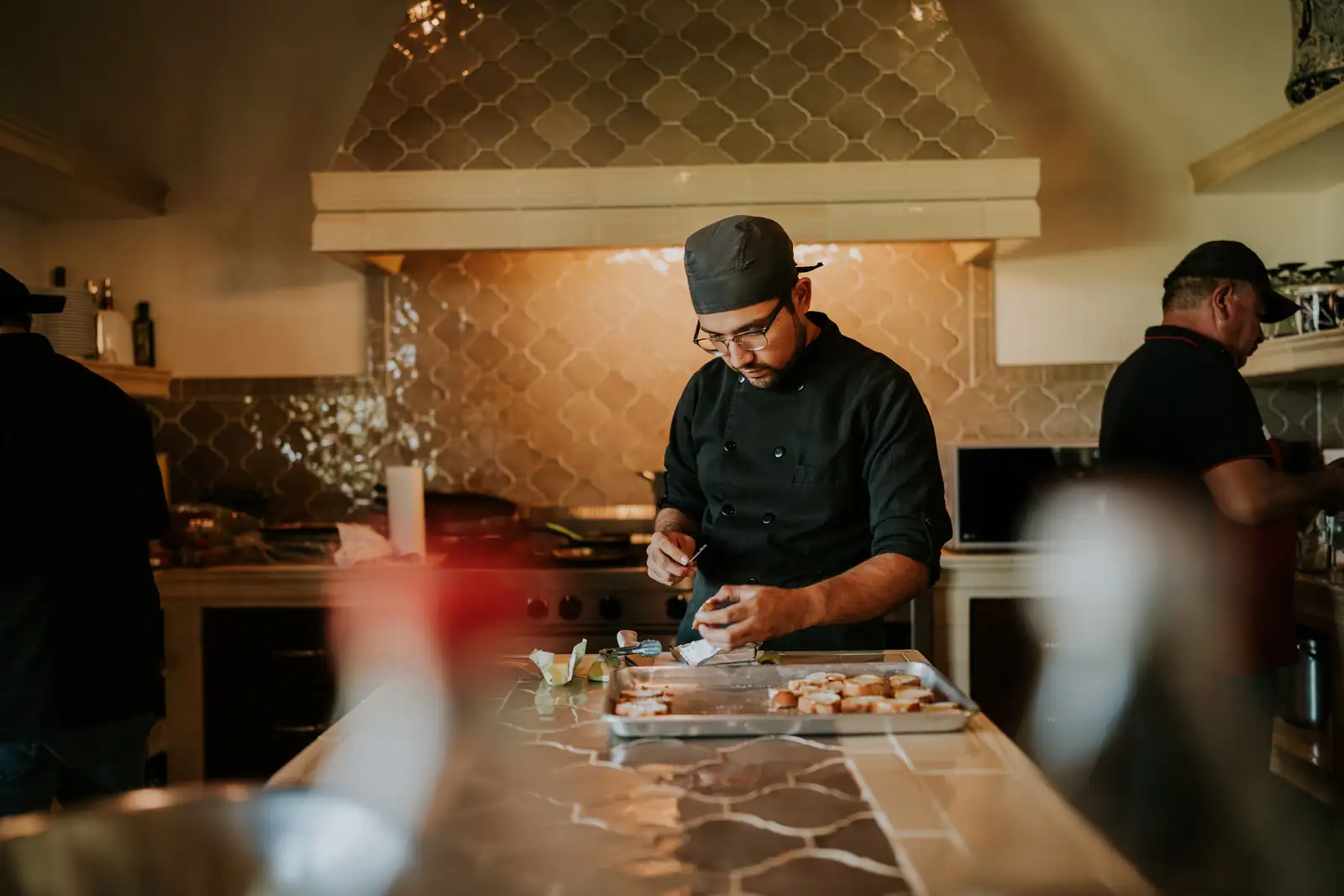
Kitchen English: short warnings and clear instructions
Kitchens are noisy and busy. Short calls help colleagues coordinate, but each team has its own procedures. Ask which calls they use and make sure you are heard. A verbal warning does not replace moving carefully.
| Phrase | When to use it |
|---|---|
| Behind you. | Announce your position while moving behind someone. |
| Hot tray coming through. | Alert colleagues to a hot tray. |
| Where does this go? | Check storage or placement. |
| Which chopping board should I use? | Check the venue’s food safety procedure. |
| Could you check this before I send it? | Request a check before service. |
| We’re running low on clean plates. | Report a supply issue early. |
Learn chopping-board rules, cleaning routines and equipment use through the workplace’s procedures. Food Standards explains food handler training requirements. To develop practical skills further, explore studying cookery in Australia.
Allergy questions: check before confirming
Do not say yes just to keep the conversation moving. Food Standards calls for allergen information that is “clear, up-to-date and accurate” in its food service guidance. Check the venue’s information and ask the person responsible rather than guessing from the name of a dish.
| Phrase | When to use it |
|---|---|
| Let me check with the chef before I confirm. | Check accurate information rather than guessing. |
| I’ve noted the allergy. I’ll tell the kitchen. | Communicate the customer’s information through the venue process. |
Noting an allergy and telling the kitchen does not by itself guarantee a dish is safe. Complete the venue’s procedure before confirming what can be offered.

Two dialogues to practise with a partner
These original exercises let you swap roles and change one detail each round: size, drink or task. Practise listening and checking rather than memorising a fixed conversation.
A seven-day practice plan
- Day 1: choose four clarification phrases and say them aloud.
- Day 2: practise coffee orders with different sizes and milk choices.
- Day 3: record the café dialogue and check whether the details are clear.
- Day 4: rehearse asking a bar manager for help.
- Day 5: listen to a kitchen instruction and repeat it in your own words.
- Day 6: practise checking an allergy question before confirming anything.
- Day 7: mix the situations without reading your answers.
Ten minutes of focused practice can help you identify difficulties; progress depends on your starting point and consistency. This Nōmadas workshop video shows a coffee practice setting. It is not an English lesson or a workplace qualification.
Before a practical interview, read what to expect at a work trial and when it must be paid. When an offer arrives, compare casual and part-time employment to find an arrangement that fits your studies.
Frequently asked questions
What English level do I need for café work?
It depends on the role and venue. You need to understand instructions, clarify uncertainty and communicate safely. There is no single level or universal IELTS score for every café job.
Can I work in a kitchen while my spoken English is developing?
Some roles involve less customer contact, but still require an understanding of instructions, hygiene and safety. Be clear about your level; less conversation does not mean no English.
Do I need an Australian accent?
You do not need to imitate one. Understanding different speakers, speaking clearly and asking for repetition are more useful. Exposure and practice help.
How can I say I did not understand?
Use “Could you say that again, please?” or ask for a demonstration. Checking instructions is part of working carefully.
Do these phrases replace RSA training?
No. They are language support. Training, accreditation and alcohol service rules must be checked separately for your state and role.
What if I do not know whether a dish contains an allergen?
Ask for time to check with the chef or responsible person and the venue’s information. Do not guess or guarantee safety without completing the appropriate checks.
Should I learn everything before applying?
Prioritise clarification, instructions and common situations for the role you want. Add vocabulary from the real menu and procedures later. Recruitment depends on more than memorising phrases.
Photography: SpotOn, Pylyp Sukhenko, Louis Hansel, Brooke Cagle / Unsplash.